DONATE NOW

Blog

A Letter from Marcelo Brondo

 We received an encouraging letter from Pastor Marcelo Brondo, who is serving with his wife Nancy in Cachi, Argentina. We’d like to share it with you because it shows just one of the many examples resulting from your support of our ministry. You can read more about our other projects at https://thecrecerfoundation.org/stories/ 

Dear Brothers & Sisters, 

I wanted to share with you about a woman named Monica, who has been coming to our church for over a year. She’s a social worker and visits many households each day, allowing her to share the Word of God as she has the opportunity. Last week she was able to share with a couple who were thankful to learn more. Monica told me about the encounter this past Thursday, so I asked her to give me directions so I could visit with my wife. 

The house is about 30 minutes away from Cachi, on a hill where few people pass by. When we arrived, before I could even introduce myself, the gentleman began to tell me about his need to learn and understand more about the Word of God. He said that as a blind man, he’s unable to read so his only access is a weekly radio program with some so-and-so Pastor Marcelo Brondo who shares the Bible. He also said this program has helped him understand much more about the Lord. 

When I told him I was Pastor Marcelo Brondo, he was shocked! Together we thanked and praised the Lord for guiding us to this house! His name is Valentin, 71 years old, and he lives with Maria Rosa who is 50. Maria Rosa was also very happy to receive us and she let us know that she always reads through the tract that was given to her 17 years ago, by a group that had shown the “Jesus film” to the families in the region. [In God’s provision and plan, this is the ministry that our Latin American director, Carlos Cañete, was working in years ago – the same region, the same year!] I have no doubt that Carlos had a hand in that! 

The Lord has opened the door for us to go every Saturday to visit and continue teaching them the gospel. We pray for their salvation! 

Pastor Marcelo Brondo 

20th Anniversary Celebration

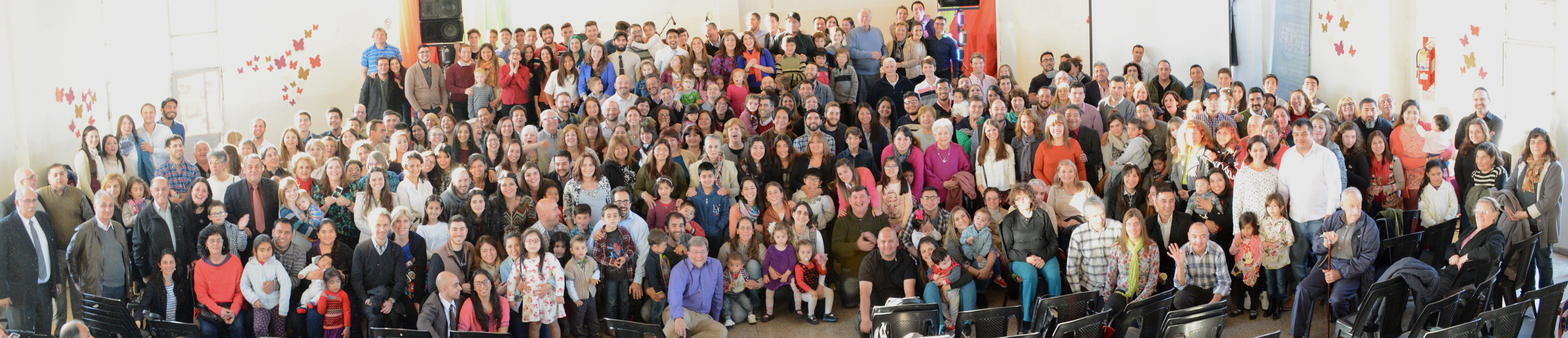
In August, our church celebrated 20 years of ministry. Representatives from all seven works made up the 450+ that were in attendance. Our sending pastor, Russell Johnson, gave the church a strong challenge from the book of Psalms. Two pastors and five deacons were ordained.

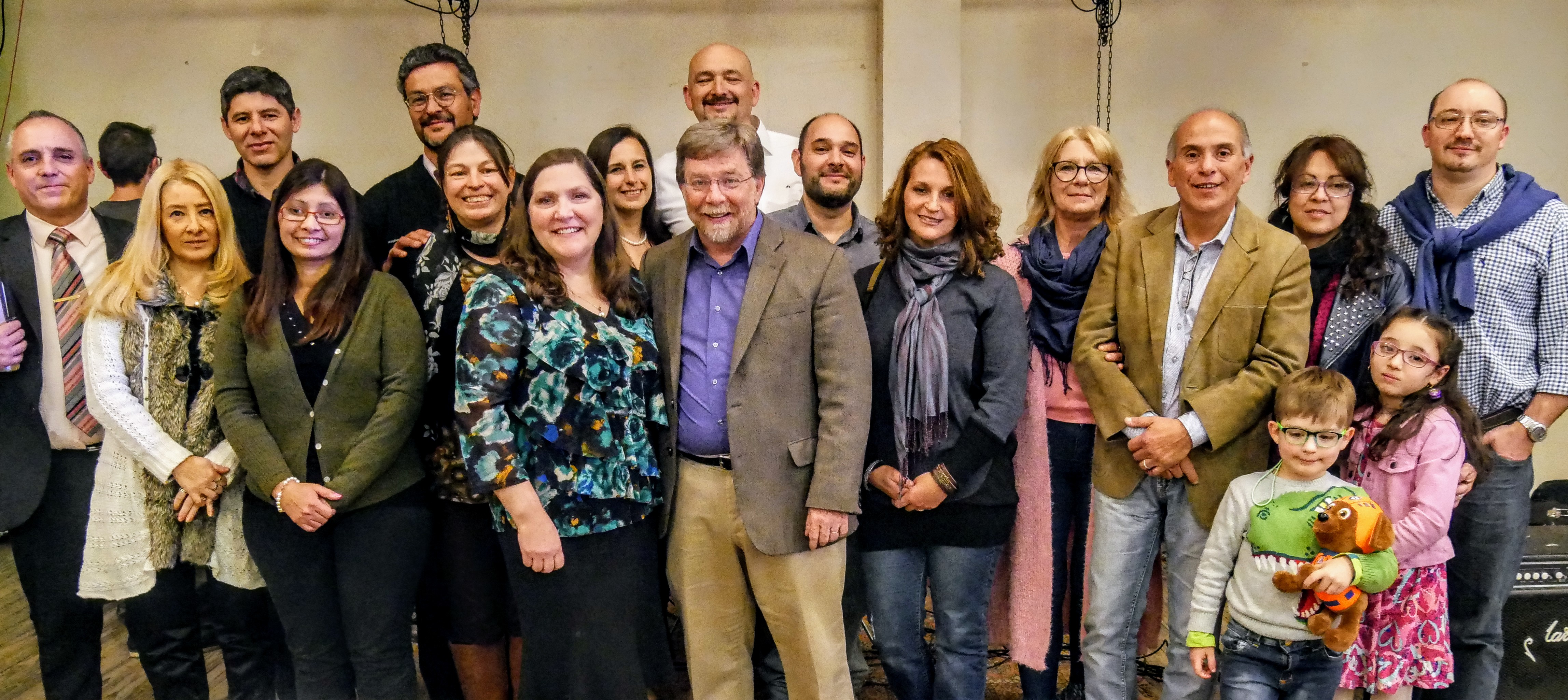
Congregation leaders: Ariel & Mónica Ficetti (Saldán), Fabián & Marcela Abregú (La Rinconada), Marcelo & Nancy Brondo (Cachi, Salta), Sam & Carita Masters, Carlos & Liz Cañete (Córdoba City), Alejandro & Soledad Grande (Jesús María), Roberto & Elida Romero (Malvinas), Fabián & Gabriela Grau (Villa Dolores) with Sofía and Juan.

Amigos Por Siempre (Friends Forever)

July means winter vacation for us here on the underside of the earth. This makes it perfect for a mission trip. Our church sent a group north to the province of Salta to minister in the Calchaquí and Lurucatao valleys. The 15 day trip was split up between three teams. Each team had at least one Seminario Carey student getting in some practical experience.

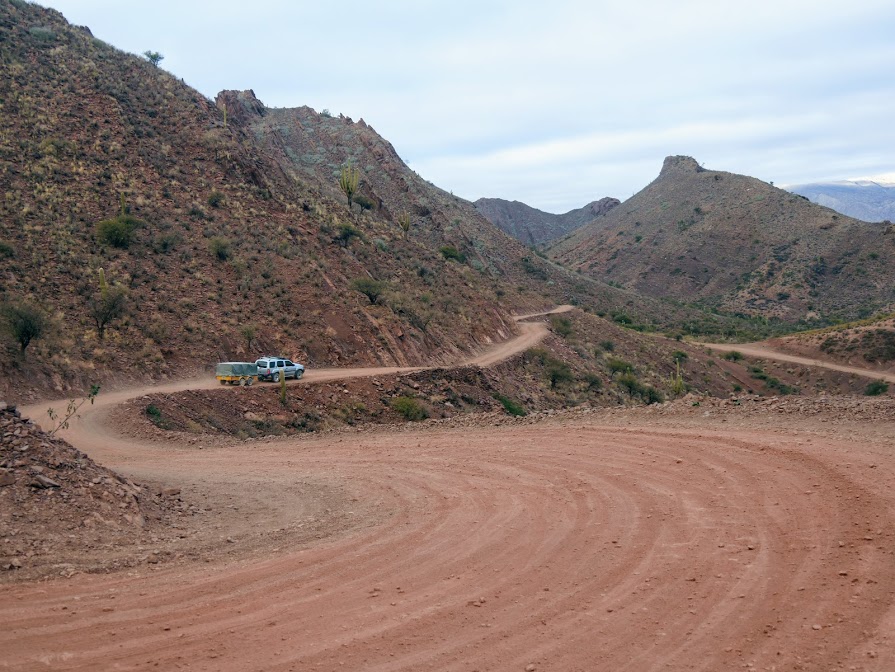
Valle Lurucatao, Salta, Argentina – Mission team driving up towards Alumbre and then Condor Huasi.

Read More

Three Ordinations and a Commissioning

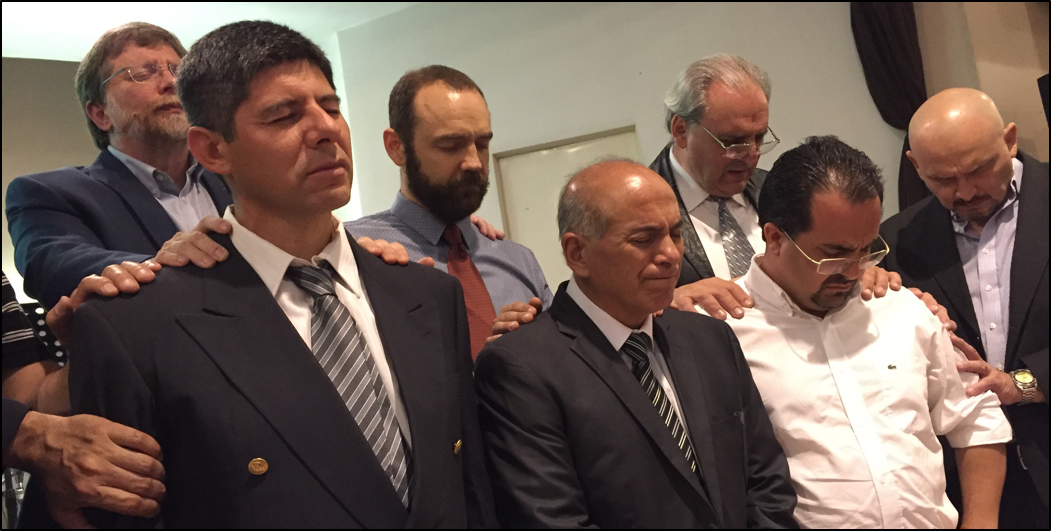
In November our church ordained three men to the gospel ministry and commissioned our first foreign missionaries. The new pastors are all men who have been faithful in ministry for a number of years. Roberto Romero is the pastor in Malvinas. Fabian Abregú leads the work in La Rinconada. And Manuel Carbonell is working in the city of Córdoba. Eva and Ernesto are our new missionaries to southern Asia.

Someone asked me how it felt to see the visible fruit of many years’ labor. I didn’t really know how to answer. Uhh—good? Truthfully, I was having one of those weird moments when it feels like it took forever and at the same time it had all flown by in an instant. Next year is the twentieth anniversary of the first church we began in Cordoba. It doesn’t seem so very long ago at the moment.

I spoke to the men on Sunday from 1 Timothy 4:16, “Keep a close watch on yourself and on the teaching. Persist in this, for by so doing you will save both yourself and your hearers.” I reminded the guys that life is short, eternity is long, and in between the two we will all face the judgment of Christ.

ordination

So run hard, my brothers. And run straight. The long, hard race must be run with persistent endurance because paradoxically it will end quicker than you think

Great Biblical Counseling Conference

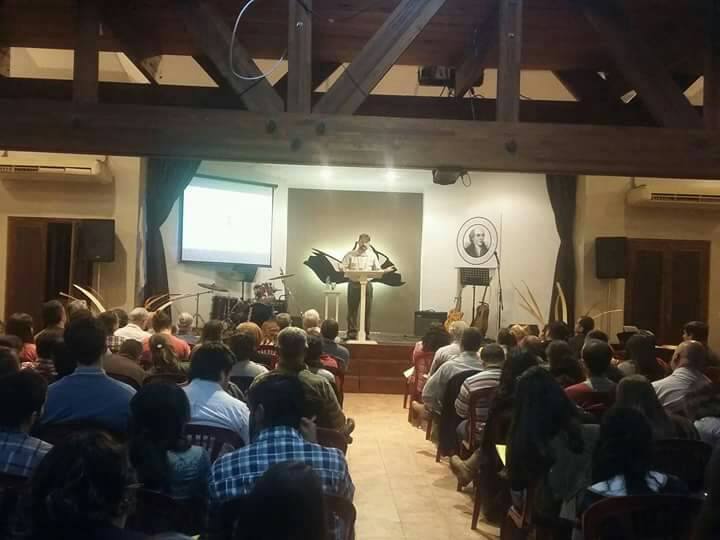
We just finished our annual theological conference with Seminario Carey. This year’s main speaker was David Barceló from Barcelona, Spain. The subject matter of the conference was Biblical counseling.

David’s teaching had a great impact. Argentina is one of the countries of the world with the greatest influence of psychoanalysis. Sadly, this has infiltrated many churches. David showed how secular psychology is in many ways an alternative religion. He also gave a fine presentation on the biblical pattern of change through progressive sanctification. One conference attendee told me that even though he had spent most of his life in church, this conference had just “shattered his paradigms.”

14492385_939348482837534_176922629741080257_n

We had attendees from as far away as Asuncion, Paraguay. If the trend continues, this is the last year we will be able to host the conference in our church. The attendance has outgrown the auditorium.

A highlight was seeing the graduation of the first three students from the pastoral training program. One of them was Roberto Romero who already leads the congregation we began in Malvinas. The other two, Esteban and Anibal, are from Buenos Aires. They both have hopes of beginning new works in that area.

14556575_940450802727302_2006249608986314220_o

The Pleasure of Prayer


Carey Students Logo


Join us in Prayer

Prayer is often against our own nature. So here is frustrating experience. This frustration has very little to do with the prayer itself and lot to do with a question: If prayer is so frustrating why keep trying? A couple of answers spring to mind.

  • One reason we may keep trying to pray is because we see it as our duty.

This isn’t wrong—of course it is our duty. But if this is the only reason it seems hard to see how prayer ever becomes anything but drudgery.

  • Another reason we might continue to pray might be simple self-interest.

We have real needs and we want them met. So, what happens if we don’t happen to need anything at the moment?

  • There is a third reason: we simply want to be with the Lord.

William Carey helps us catch a glimpse of how this might motivate our prayers. Carey often expressed frustration with this prayer life, but not every entry in his journal speaks of dry prayers. For example, he writes at one point, “I have this day had more enjoyment of God than for many days past. I trust that the reading of the Bible has been truly useful to my soul. Had some affecting views of the value of Christ, and grace, (…) Felt enlarged in prayer, and thankful for the many mercies which I daily receive from God; but my unprofitableness has been a source of humiliation to me.”

“I have this day had more enjoyment of God than for many days past.”
William Carey
William Carey

I have experienced moments that I could describe as “enjoyment of God”. They haven’t come as often as I might like. And I am not sure that they can be generated at will. But there have been enough to make me want more.

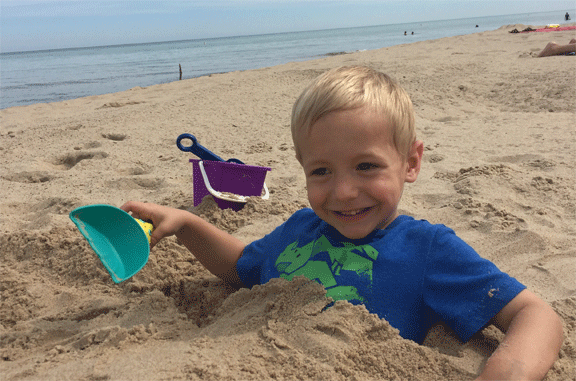
My wife and I have been grandparents for four years. We now have four grandchildren. That seems like a pretty good pace to me. We recently visited the home of our oldest grandson. He told us he wanted to show us a picture in his room. It was a picture of my wife and I. Of course we were ecstatic that he had this in his room because we want him to remember us. Maybe you can imagine what we felt when, as we stood there with our grandson, we heard him say softly as if to himself, I miss them. We miss him too.

Grandson Noah

We enjoy being with our grandchildren. Assuming that the kids are behaving (and that grandpa is behaving—in both cases the standards are pretty lax), I can’t think of anything I would like more then to spend the day with our grandchildren.

In one sense the entire history of redemption is about God’s plan to restore fellowship between him and us. Adam used to walk with God in the garden. I wonder what that was like? I am sure it was even better than an outing with the grandchildren.

Prayer is part of the process by which God fits us for heaven. There are moments when the Lord feels very close. When we read his word and our heart burns within us, we can almost hear his voice. In those moments the tightness of our heart begins to loosen and we can pour out our souls in prayer. Those are good moments. I want more.


Carey Students Logo

It is our hope & prayer that the students of Seminario Bíblico William Carey would simply want to be with the Lord. That as they are being taught and trained to take the Gospel to their cities and neighborhoods, they would also have more and more the “enjoyment of God.”

Would you pray with us?


Join us in Prayer

A High View of Prayer


Carey Students Logo


Join us in Prayer

Probably the most famous quote by William Carey is “Expect great things from God. Attempt great things for God.” This was the title of a message he preached that played a role in launching the Baptist Missionary Society. It has been used endlessly ever since, sometimes to regrettable effect.

I remember years ago sitting in a meeting of pastors where a representative of a Bible school gave a rousing talk based on Carey’s quote. He was announcing a new project he hoped the attendees would support financially. He built up the suspense masterfully. I have to say, however, that when he told us the project was to fix the stairs on the married students dorm, the effect was sort of anticlimactic.

“Expect great things from God. Attempt great things for God.”
William Carey
William Carey

As wonderful as Carey’s quote it is, it can be misinterpreted as much as it can be misused. It can be taken as a motivational poster for a very man-centered approach to life and ministry—as if Carey was some sort of 18th century prosperity gospel preacher. It all depends on where we think the accent falls.

It helps to understand that Carey came from a Baptist tradition that placed a heavy emphasis on God’s sovereignty. Even good things can be distorted, and many Baptists in Carey’s day had fallen into hyper-Calvinism. They went to the extreme of teaching that the gospel should not be offered freely to sinners. Revival came as a circle of young pastors who were friends of Carey read books by Jonathan Edwards and others—especially the Bible. Their conclusion was that, yes, God is great and absolutely sovereign. And this great God commands that preachers plead fervently with the lost so that they might be saved.

What these friends of Carey recovered was a balanced view of the character of God. God is sovereign and all powerful. He is righteous. And he is also merciful and gracious. A failure to take all of these aspects of God’s character into account produces a lopsided message. It will also produce a lopsided approach to prayer.

Our view of God’s character has a lot to do with our prayer life. When we see God’s character as defined by both sovereignty and grace, we can begin to sing the first notes of the true melody of prayer. It is the tune Jesus taught us. The melody begins with these notes, “Our Father, who art in heaven…” And there is a line of harmony that joins perfectly with the melody, “Give us this day…”

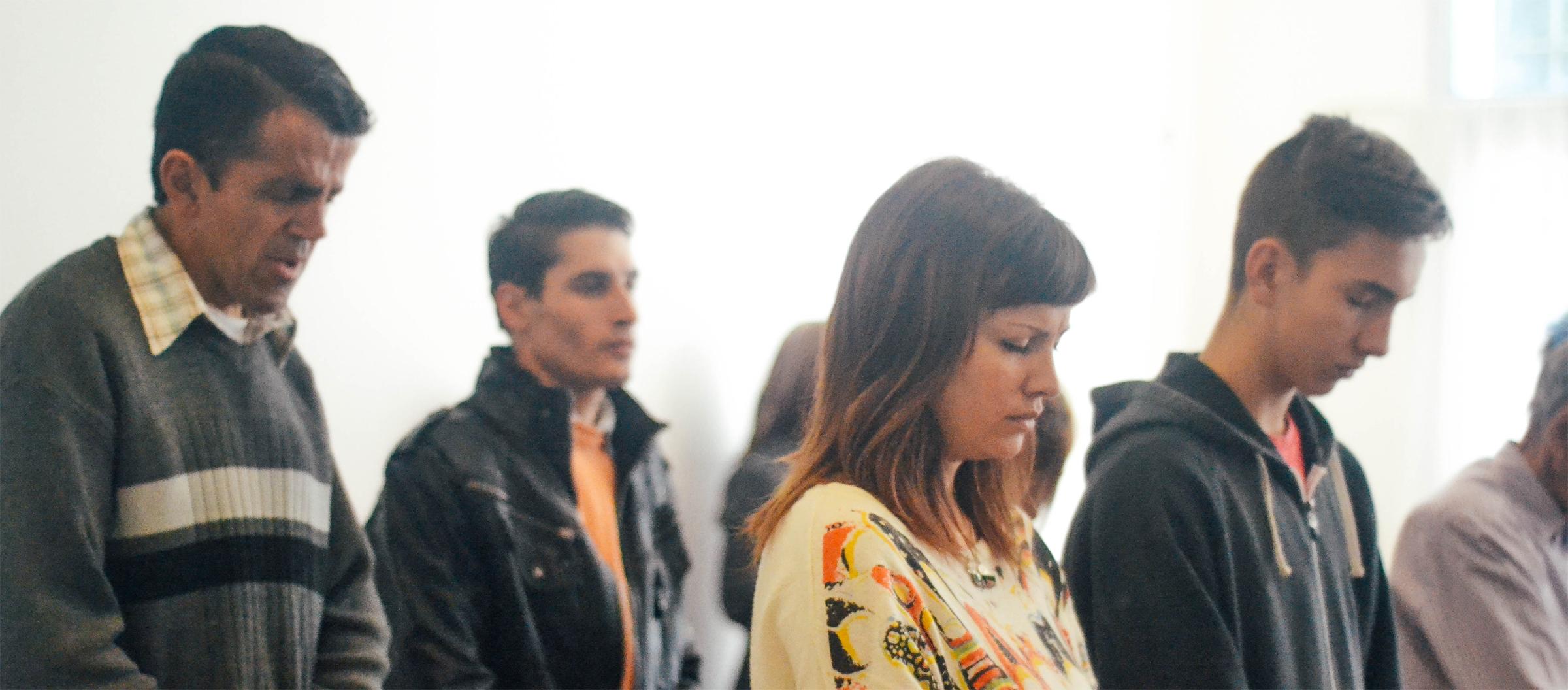
Congregation Praying

William Carey’s sister, Mary, recalled after his death the great concern he had had for her soul before he had gone to India. She stated that God had enabled William to see that “he was a prayer-hearing and answering God, though he long called him to wait. O what a privilege to have praying relations; and what a mercy to have a God that waits to be gracious.”

There is a young man in our church in Córdoba named Germán. From the time he was an early teen he was involved with a pretty rough crowd. He says he always had a pistol with him and he was involved the kind of things that could have easily gotten him killed. One day he reached such a low point of despair that he went into his bedroom and put the gun to his temple. When he pulled the trigger the gun misfired. He said at that point he fell on the floor and called out, “God, if you are there, help me.”

And God did.

He came to Christ by listening to the local Christian radio station (BBN). When he asked them about a good church to attend, they sent him in our direction. He is finishing his high school GED so that he can study with us at Seminario Carey.

God answers prayers like the one Germán prayed. Do you remember the leper in Matthew 8 who came to Jesus and said, “Lord, if you will, you can make me clean.” (ESV) Jesus said very simply, “I will. Be clean.”

A high view of prayer rests on a high view of God’s character. He can. And he will. He is both great and gracious.


Join us in Prayer


Carey Students Logo

The Disproportionate Effects of Prayer

I know we are supposed to persevere in fervent prayer (See Colossians 4:2). Although I experience moments where my heart seems to flow in praise and intercession, it doesn’t happen nearly as much as I would like. Sometimes I wonder if my prayers are adequate.

William Carey was, of course, a great example of perseverance in prayer. Long before he published the Enquiry he had made a large map of the world that he hung in his shoe repair shop as an aid in prayers for the world. After his death his sister Mary recalled, “I forgot to mention that he was always, from his first being thoughtful, remarkably impressed about heathen lands, and the slave-trade. I never remember his engaging in prayer, in his family or in public, without praying for those poor creatures.”

My own father gave me an example of perseverant prayer. Dad had a remarkable character. Before becoming a missionary he had been a drill sergeant in the Marine Corp— you get the idea. He was a very stubborn man; he simply would not quit. When other missionaries threw in the towel my Dad and Mom just kept going. I remember when I was a teenager, during one of the most difficult periods in my parent’s ministry in Argentina, one night at two in the morning I saw the light on in my Dad’s study. I peeked through the window and saw my Dad behind his desk on his knees in prayer. My Dad was stubborn, but his stubbornness was channeled into prayer.

“His stubbornness was channeled into prayer.”

I have seen the fruits of enduring prayer in my own ministry. For something like a decade before we began our church in Córdoba, Argentina, I felt compelled to pray for God to raise up men. Not every day, but often, I would simply ask God for “the twelve”. I had been convinced by Robert Coleman’s book The Master Plan of Evangelism, that the way to see mission growth was to disciple men. So I asked God for twelve men. Years later he has given us many more than we asked for, both in the churches the Lord as allowed us to plant and through Seminario Carey.
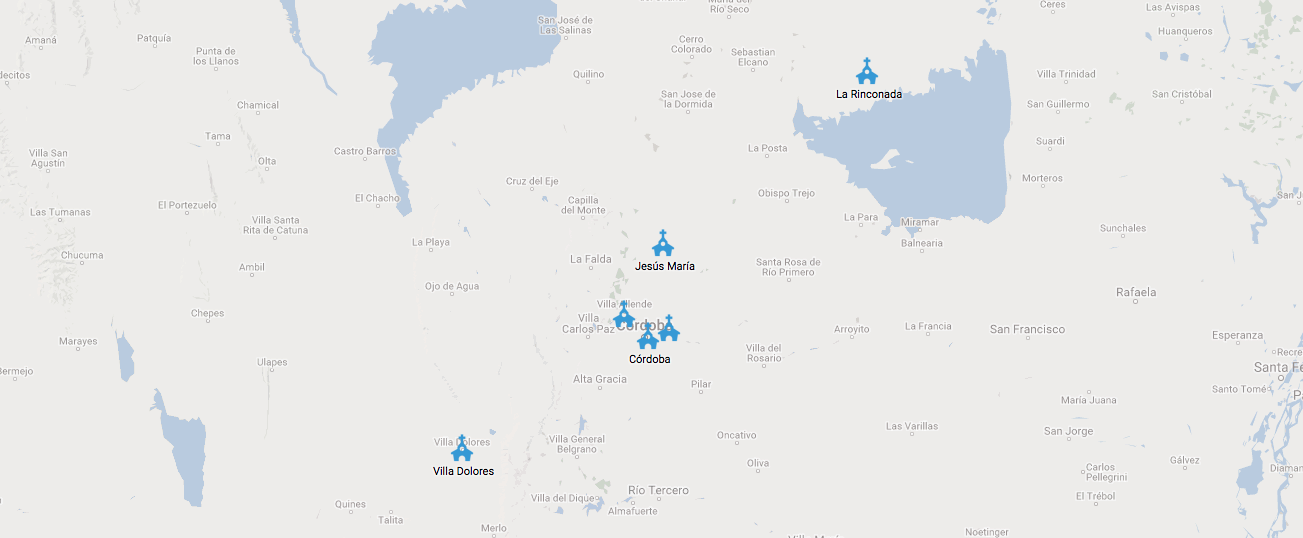
Map of church plants

Now before you get the idea that I am some sort of prayer ninja, let me confess that there are a number of areas in my prayer life where I have run out of steam. When we first moved into our neighborhood in Córdoba we prayed a lot for the salvation of our immediate neighbors. What is more, we actively engaged them for the sake of the gospel. Not one has ever come to Christ. We have seen fruit in other places, but after twenty years, I must admit, my occasional prayers for the people on our street are just formalities. I make myself go through the motions at times, but I know my prayers are flat.

My own failures explain why I have found encouragement in a statement Carey makes in the Enquiry:

With respect to our own immediate connections, we have within these few years been favoured with some tokens for good, granted in answer to prayer, which should encourage us to persist, and increase in that important duty. I trust our monthly prayer-meetings for the success of the gospel have not been in vain. It is true a want of importunity too generally attends our prayers; yet unimportunate, and feeble as they have been, it is to be believed that God has heard, and in a measure answered them.
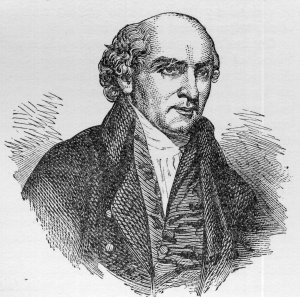
William Carey
William Carey

The prayer meetings Carey mentions were a response to Jonathan Edward’s famous Call to Prayer. At this stage, God had just begun to answer Carey’s prayers. The great missionary expansion that his ministry would spark was still in the future, but Carey is already seeing answers in spite of the fact that he is not satisfied with the quality of their intercessory efforts. These answers encouraged him to persist in prayer.

This is helpful to me since I am not satisfied with my own prayers. Carey himself often expressed similar dissatisfaction. For example, he wrote in his journal:

“I am very defective in all duties, both with respect to the matter and manner of them. In prayer I wander, and am formal, not having that lively sense of my wants which is necessary to wrestling with God. I ask for blessings, yet seem almost contented to go without obtaining them. I soon tire; devotion languishes; and I do not walk with God, considering myself always as in his sight. O what a mercy it is to live near to him, and to realize his perfections and relations to us constantly.”

We must do all we can to persevere in fervent prayer. However, in the final analysis, there is a deeper dynamic at work. The size of God’s answer to our prayers is always disproportionate to the quality of our intercessions. This is because God responds on the basis of his own astounding grace and not our paltry efforts.

As I mentioned, before I ever returned to Argentina as an adult, I regularly prayed for the Lord to give us twelve men to train for ministry. This is the key to long-term growth. The Lord has answered far beyond what I anticipated. We have seen six works started at this point. Right now, just in these congregations there are 35 men who have expressed a desire to be trained for ministry. If we include those studying in the Seminario Carey we have close to two hundred men and women. Now our prayer is that the Lord would provide the resources so that these students can be properly trained.

“Now our prayer is that the Lord would provide the resources so that these students can be properly trained.”

When we come to see how abundantly the Lord responds to our meager prayers, it starts getting easier to pray for situations that seem impossible to change: whether it is for the condition of our lost world, for our neighborhoods, or our families. We can say with the Psalmist, “But as for me, my prayer is to you, O Lord. At an acceptable time, O God, in the abundance of your steadfast love answer me in your saving faithfulness.” (Psalm 69:13 ESV)

Will you join us in this prayer?


Join us in Prayer


Carey Students Logo

The Absolute Necessity of Prayer

In 1792 William Carey published what is probably the most significant book on missions since the time of the apostles. Its full title is An Enquiry into the Obligations of Christians to Use Means for the Conversion of the Heathens. Carey’s argument is encapsulated in this title. Briefly stated, Carey believed the Great Commission is still incumbent on us and that every legitimate means should be employed in the fulfillment of the command. In other words, Carey favors the active use of means. 


By means, Carey refers to everything, from the printing press and sailing ships, to innovative organizational structures like the voluntary society. If we left it there we might conclude that Carey was a bit of a pragmatist. That would be a mistake, of course, since Carey had a high view God’s sovereignty and he built his mission theology on the bedrock of the doctrine of divine providence.

In the Enquiry, Carey makes a statement about prayer that puts all of this into perspective. He writes:

“One of the first, and most important of those duties which are incumbent upon us, is fervent and united prayer. However the influence of the Holy Spirit may be set at nought, and run down by many, it will be found upon trial, that all means which we can use, without it, will be ineffectual. If a temple is raised for God in the heathen world, it will not be by might, nor by power, nor by the authority of the magistrate, or the eloquence of the orator; but by my Spirit, saith the Lord of Hosts. We must therefore be in real earnest in supplicating his blessing upon our labors.”
William Carey
William Carey

We will come back to this statement, but for now, let’s focus on the idea that all of our efforts will be “ineffectual” if not accompanied by the power of the Spirit of God. While Carey wrote his Enquiry to break through the numb passivity of the churches of his day, he did not believe that all that was required was human effort by means of human methods. He argues vigorously for the use of all “legitimate means,” and yet he states that their employment will be useless unless God chooses to act.

Carey certainly thought in terms of printing presses, ships, and societies—the nuts and bolts of mission work. In this passage of the Enquiry he expands the list to include the power of human persuasion and the authority of human government. Carey would have recognized a role for oratorical skills in the preaching of the Gospel. As a Baptist, he would have been much less inclined to believe that secular government had a role in spreading the kingdom of God. But in either case, he wants us to see that ultimately a temple can only be raised by God in a lost world by God’s own power.

Then he said to me, “This is the word of the LORD to Zerubbabel: Not by might, nor by power, but by my Spirit, says the LORD of hosts.

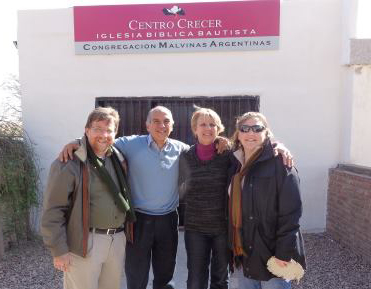
In this statement on prayer, Carey is paraphrasing from Zechariah 4:6, a divine statement about the construction of the temple in Jerusalem. Carey applies it to the larger task of world mission. One of our students, Roberto Romero could attest to the validity of Carey’s application of the text. Roberto and his wife Elida are a couple in their sixties who for many years spoke to me about the needs of a town near the city of Cordoba in Argentina. Malvinas has a population of about 10,000 people. They are generally poor and there are real problems with drug dealers in the area. Many years ago, they took me to visit Malvinas. They hoped we might start a church in the area. At the time we didn’t have the resources or a pastor.

For ten years Roberto and Elida prayed that God would send a pastor. God eventually answered that prayer in a way that was surprising to Roberto and Elida. They began a small group in the area that began to gradually grow. Roberto saw the need to be better prepared so he began to take classes with Seminario Carey. The group continued to grow and a few years ago they rented property to begin Sunday services.

Roberto continued studying. He will finish his final course of the certificate program in Seminario Carey this year. In November, Roberto will be ordained as pastor of the work in Malvinas.

Roberto would agree that we should apply Carey’s statement on the necessity of prayer to every area of our life; whether it be our local church, our job, our family, or the hidden kingdom of our own heart. A temple to almighty God will only be built by the power of his Spirit. We must pray.

Roberto & Elida Romero

“A temple to the almighty God will only be built by the power of his Spirit. We must pray.”

This is really a simple lesson, but I find my heart rebels against it. I have had to learn it over and over. But God is very good and he uses my frustrations to drive me to my knees. Again and again He has brought me back to the truth that unless He builds the house we labor in vain. On the other hand, when the power of his Spirit begins to move, nothing can stand in the way, and what he builds is so beautiful that it inspires worship in the hearts of all who see it.


Join us in Prayer


Carey Students Logo